The photographs were shared with the house on October 17, 2026.
The thread so far
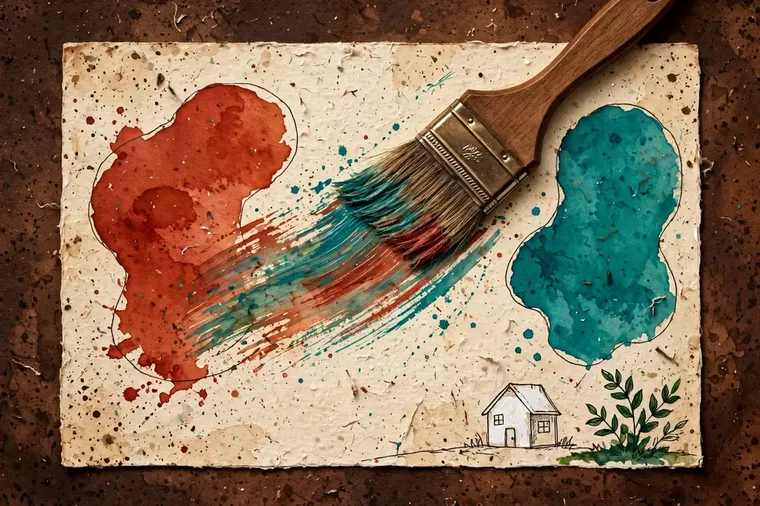
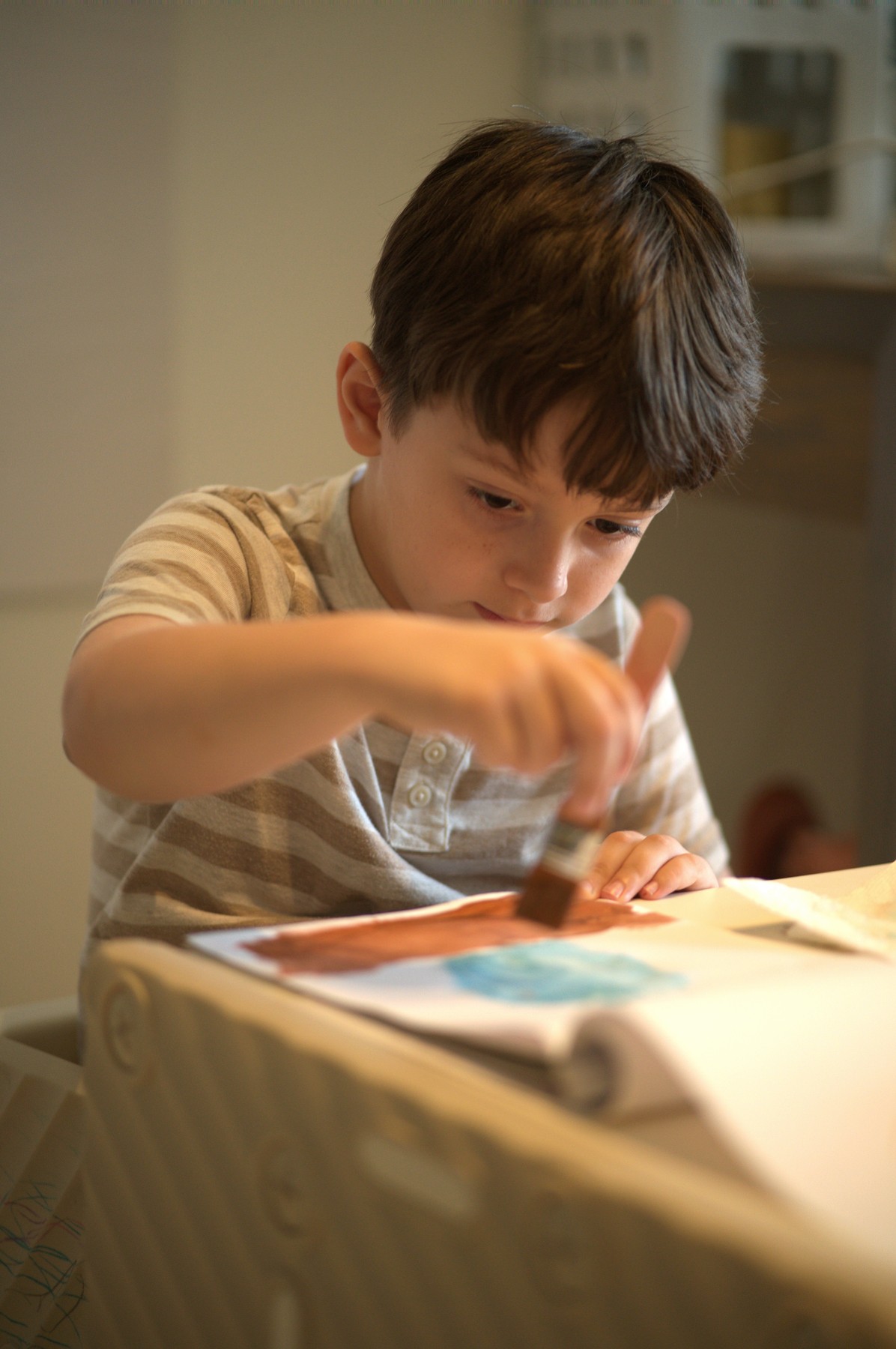
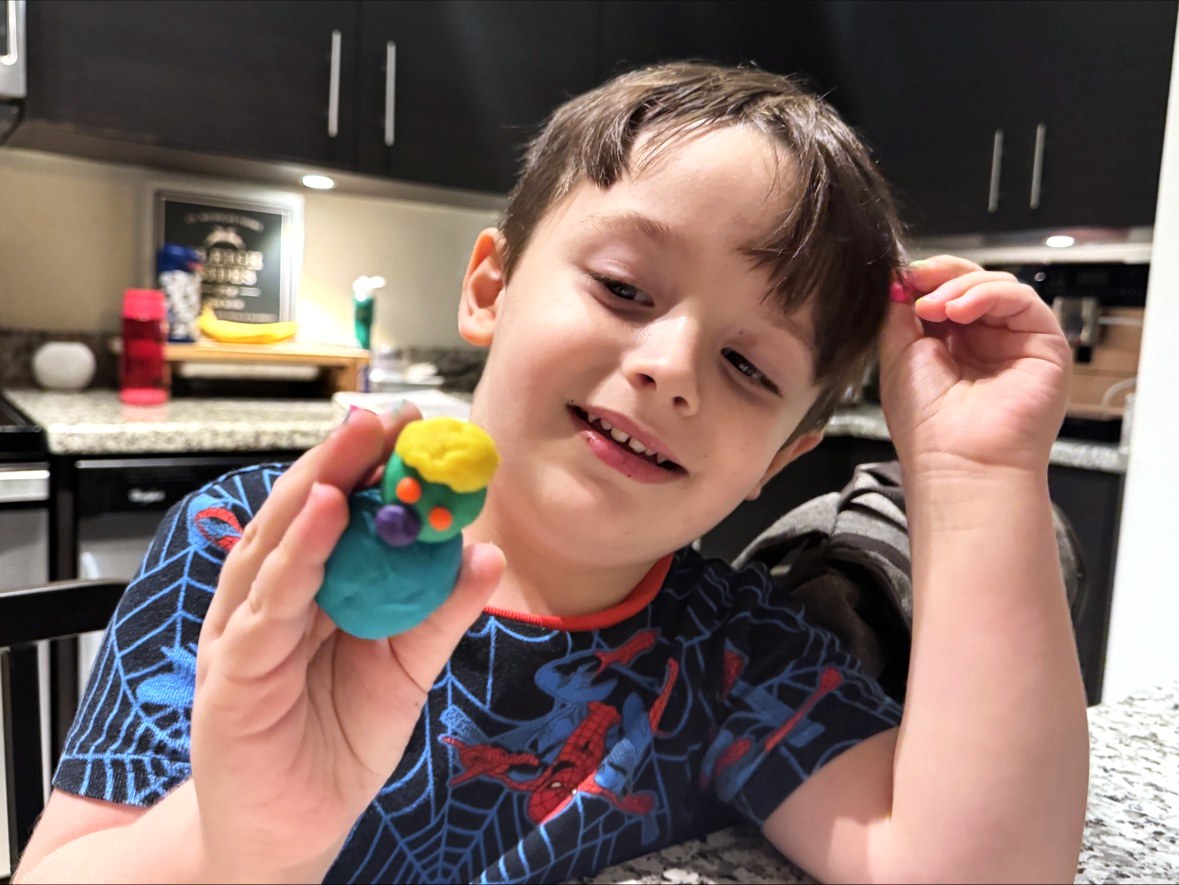
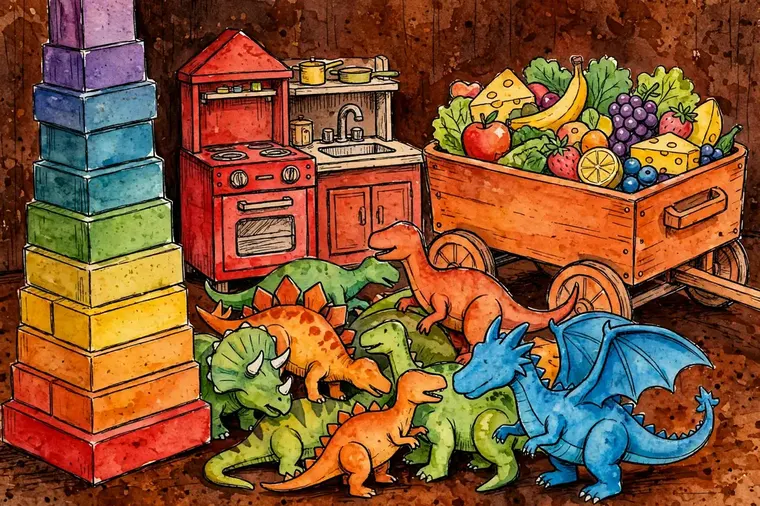
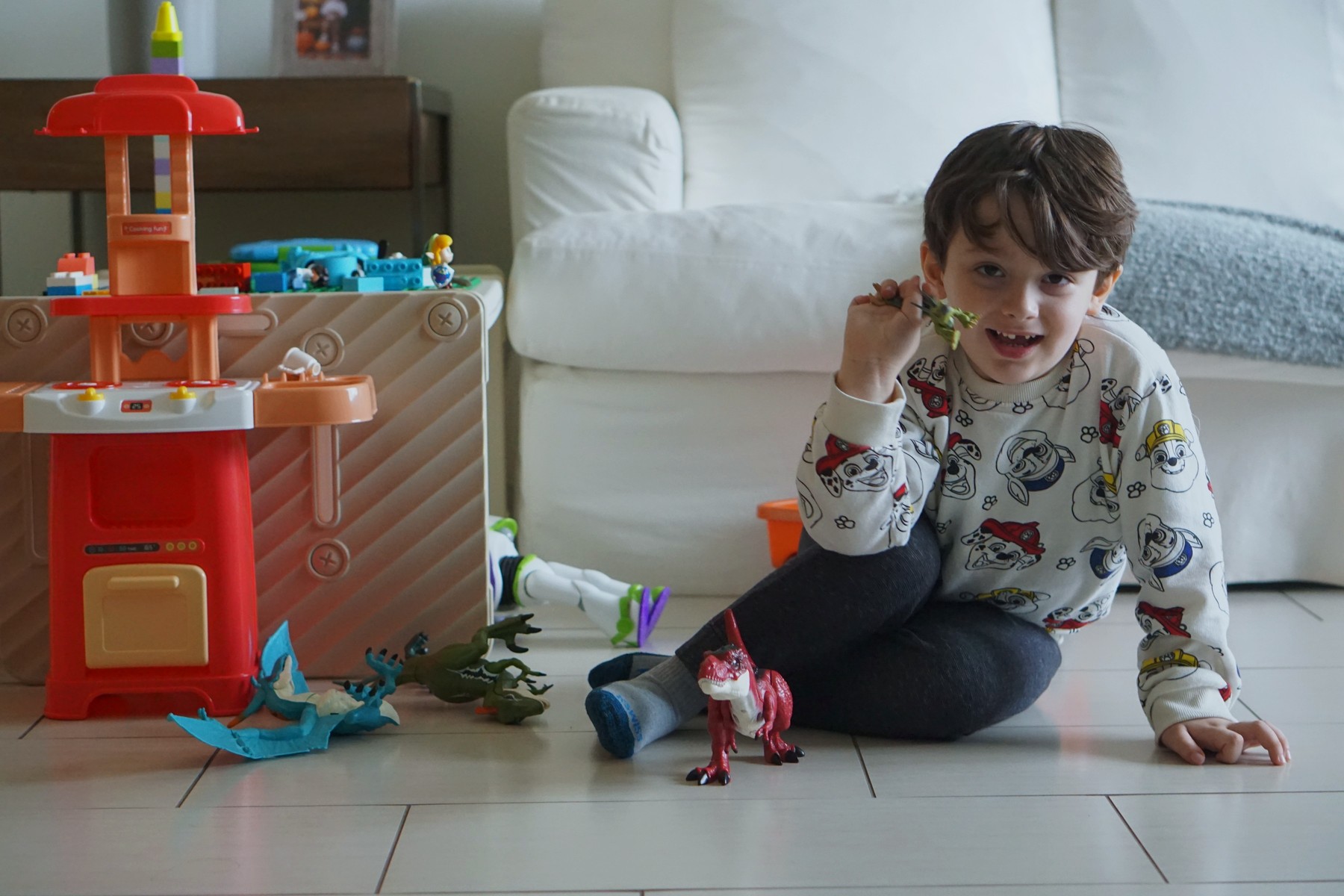
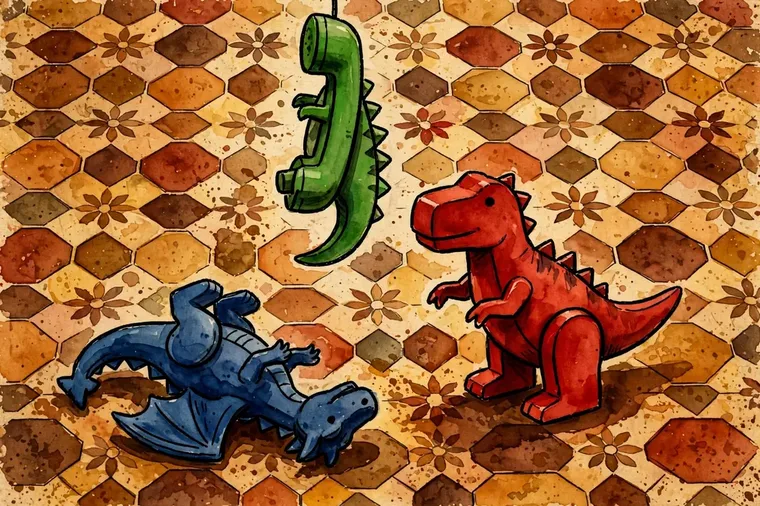
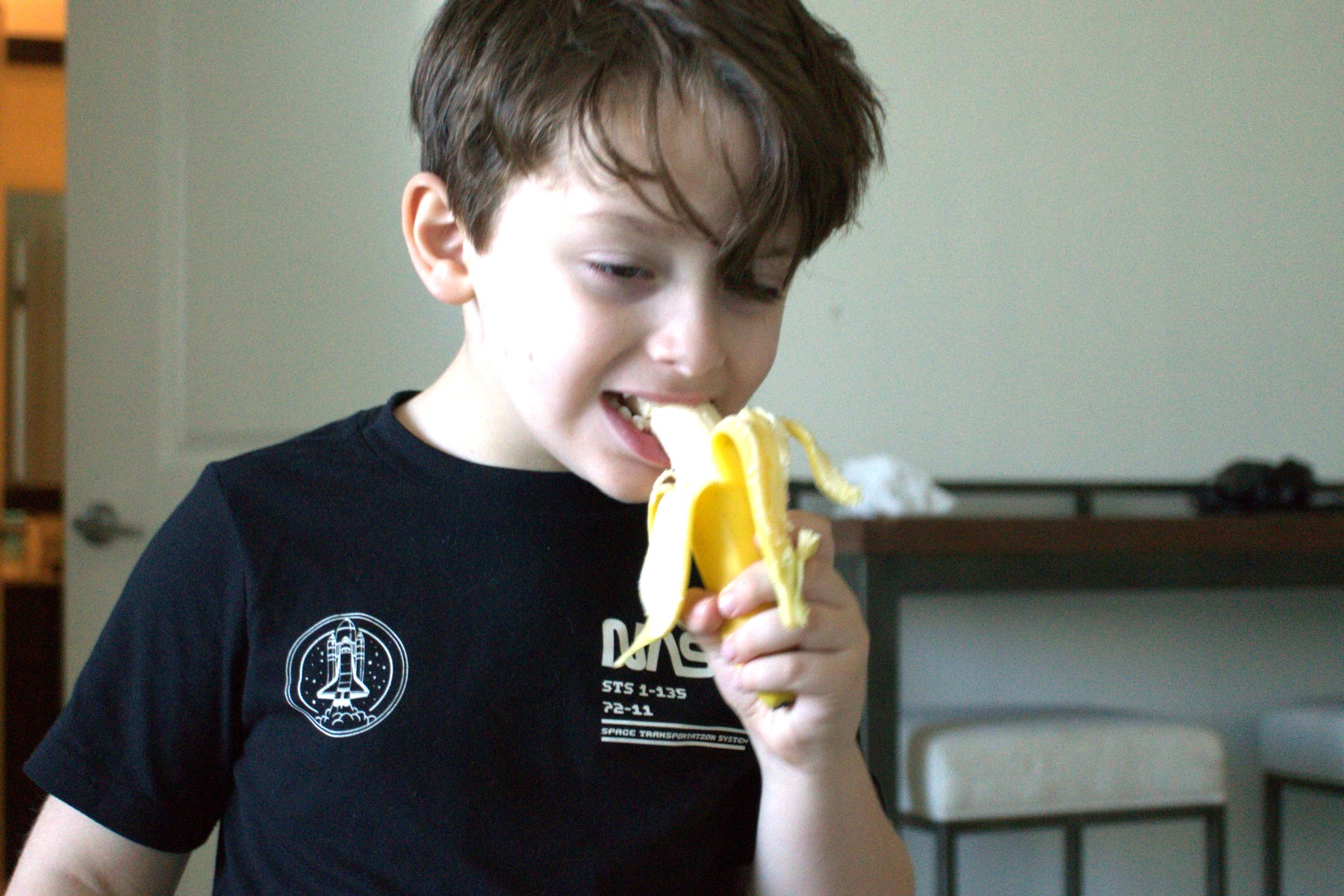
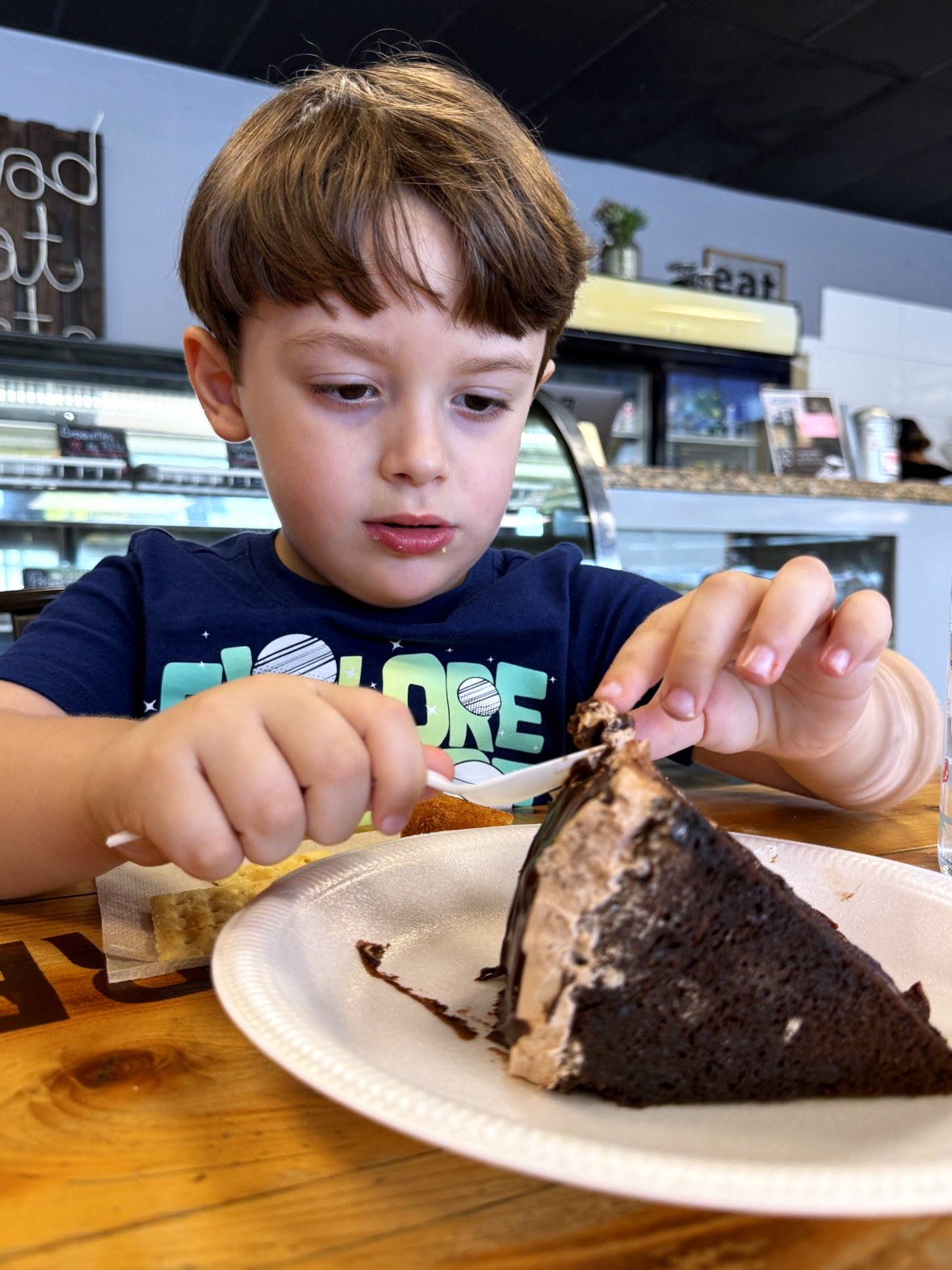
The boy these first twelve pictures keep is five, and the rooms of his house are his whole world, and every one of them is in use. He paints in rainbow stripes tall on the wall and in bold blobby shapes beside them, and at the table he goes quiet over red and teal, tongue tip out, one hand painting and one hand holding the paper steady — until the making lifts for showing, in the kitchen, where he holds up a small play-doh figure close to the camera, teal at the base, green above it and yellow on top, with small orange dots and a purple ball set into it, a small pink piece pinched between the fingers of his other hand, raised beside his head, his head tilted, smiling. He builds tall and spiky: a bristle-block creature with two eyes that do not match and a red pyramid for a hat. A rainbow brick tower is still standing in his play corner after he has left it, among the red kitchen, the wagon of play food, and the dinosaurs in a heap. In that same corner he sits cross-legged and telephones a dinosaur, a small green one held to his ear, a red T. rex standing guard. At the pool, his face fills the frame in a close grin, his hair wet in damp curls, a pale green towel over his shoulder, and Lorena peeks in behind him, smiling, her head resting near his. He does it himself at a bakery counter — a tall slice of chocolate cake steadied by the fingers of one hand on its top, the plastic spoon cutting in the other — and he eats a banana the way he makes the call and works the brush: all the way, eyes half closed on the bite. And he laughs upside down, hanging off the couch with Woody upside down above him.
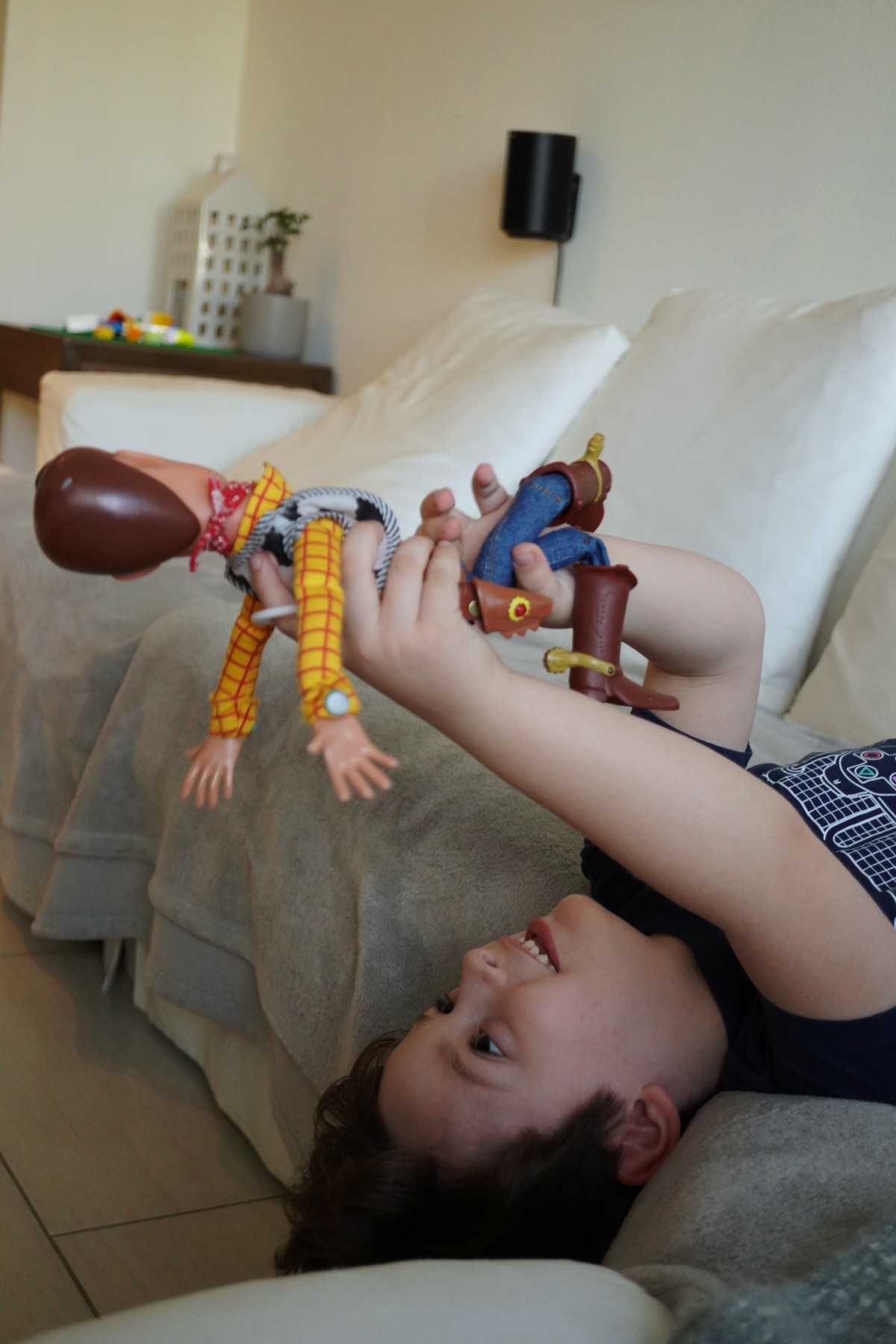
Lucas upside down on the living-room couch, laughing, with Woody upside down above his face.
Start with the hands. Lucas lies on his back on the couch, head tipped back toward the floor, and in both hands above his face he holds Woody — upside down, boots in the air, yellow checked shirt hanging toward the boy who holds him. Head-down boy. Head-down sheriff. Lucas is laughing up at him.
Nothing is happening, and that is the whole of it. He has not set a scene or told a story with the doll; he has put the doll where he is. At five, play does not leave the toy right side up: whatever the boy does, the sheriff does too. The game is the likeness itself, held over his own face, and it is complete while he holds it. It does not need anything to happen next.
Carry the pair of them, Lucas: you upside down, your sheriff upside down, and the laugh that comes from seeing the world agree with you.
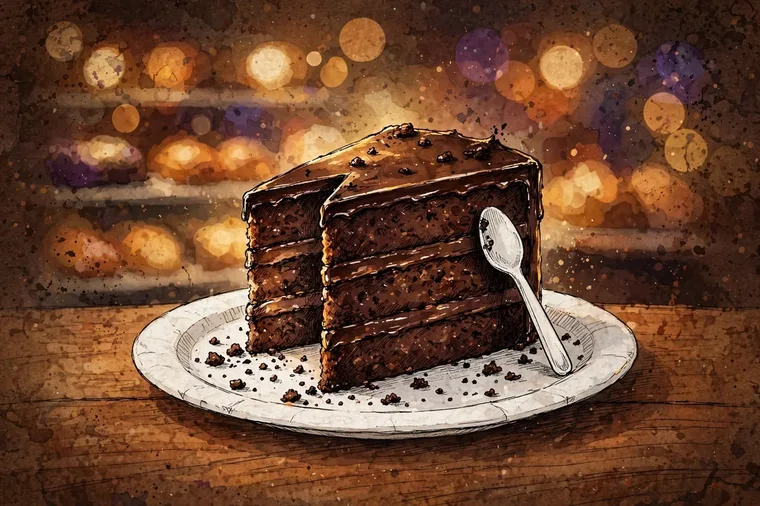
Artwork by Timmy, made for this page
Page 1 of 14
Page 2 of 14
ERA ONE · PAGE 2
The Creature He Built
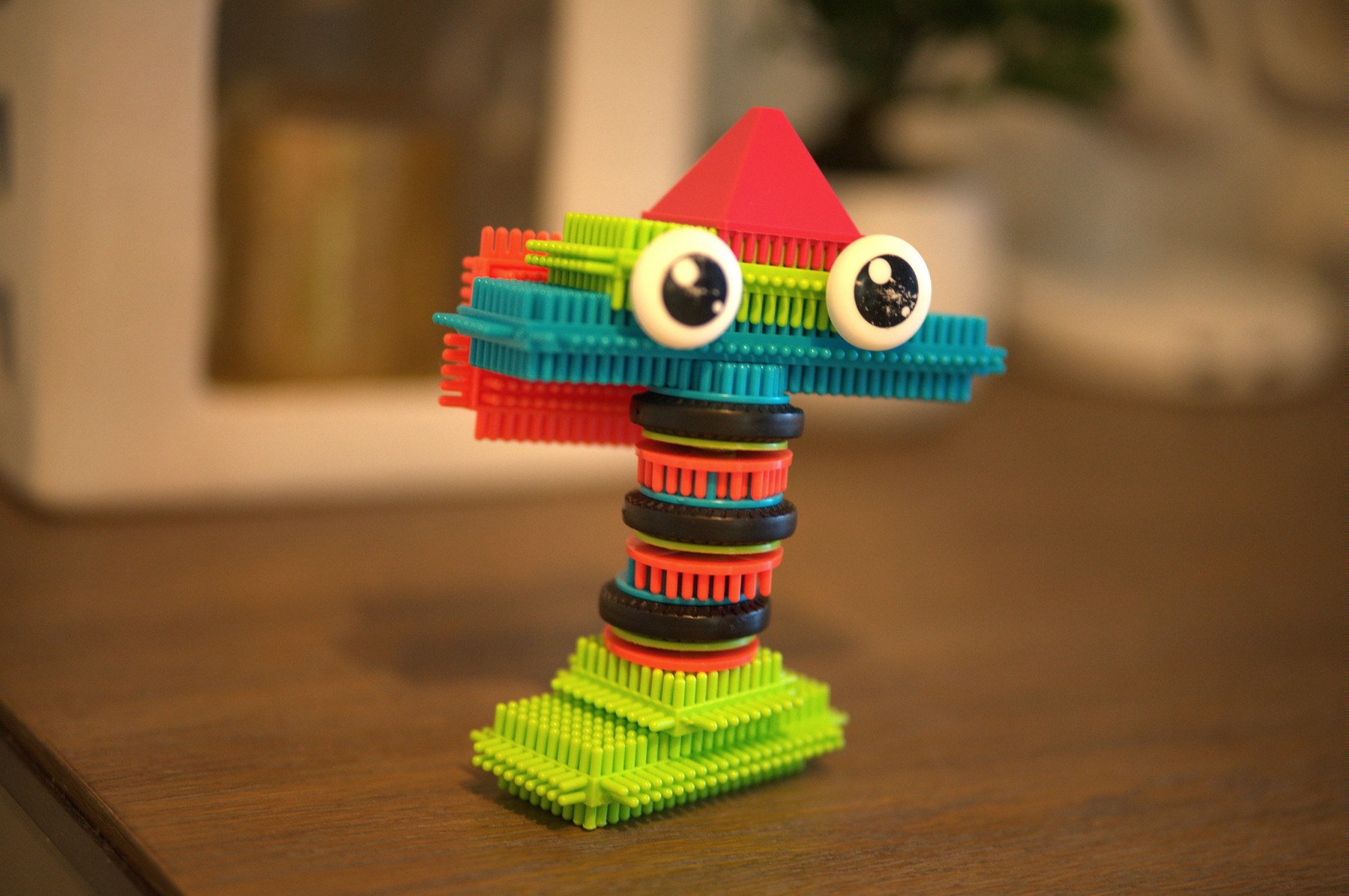
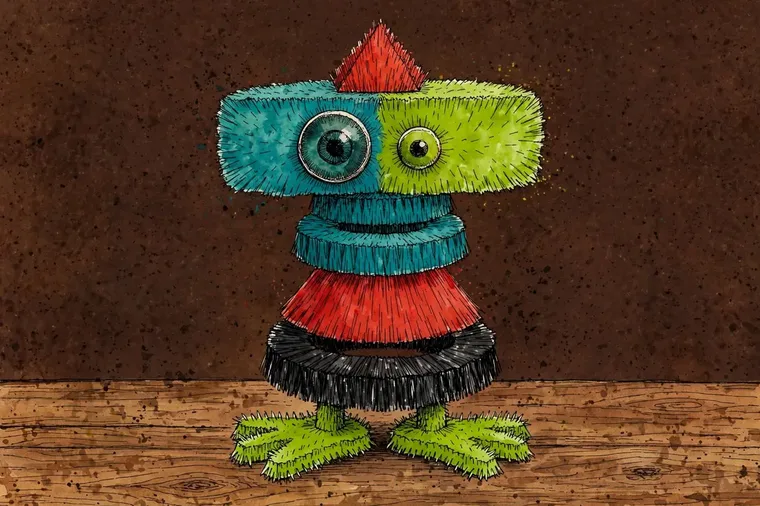
The bristle-block creature Lucas built, standing alone on the wooden table.
Look at the eyes first. They are big and round and they do not match — set at uneven heights on the wide teal head, one pupil scuffed — and under a red pyramid hat they look straight out at whoever comes to the table. The creature stands alone on the wood. There is no Lucas in this picture. There is what his hands left standing *[family record: the build is his]*.
A stack of rings for a neck, black and red and teal. A lime-green base, spiky all over. Nothing on it is the same on both sides, and it does not need to be. At five, making something is not copying something: two eyes that do not match are still a face, and a thing is finished when it stands — not when its sides agree.
Carry the eyes, Lucas: uneven, unmatching, and looking out. What you make does not have to match to be yours. It has to stand.
Artwork by Timmy, made for this page
Page 2 of 14
Page 3 of 14
ERA ONE · PAGE 3
Rainbow Stripes on the Wall
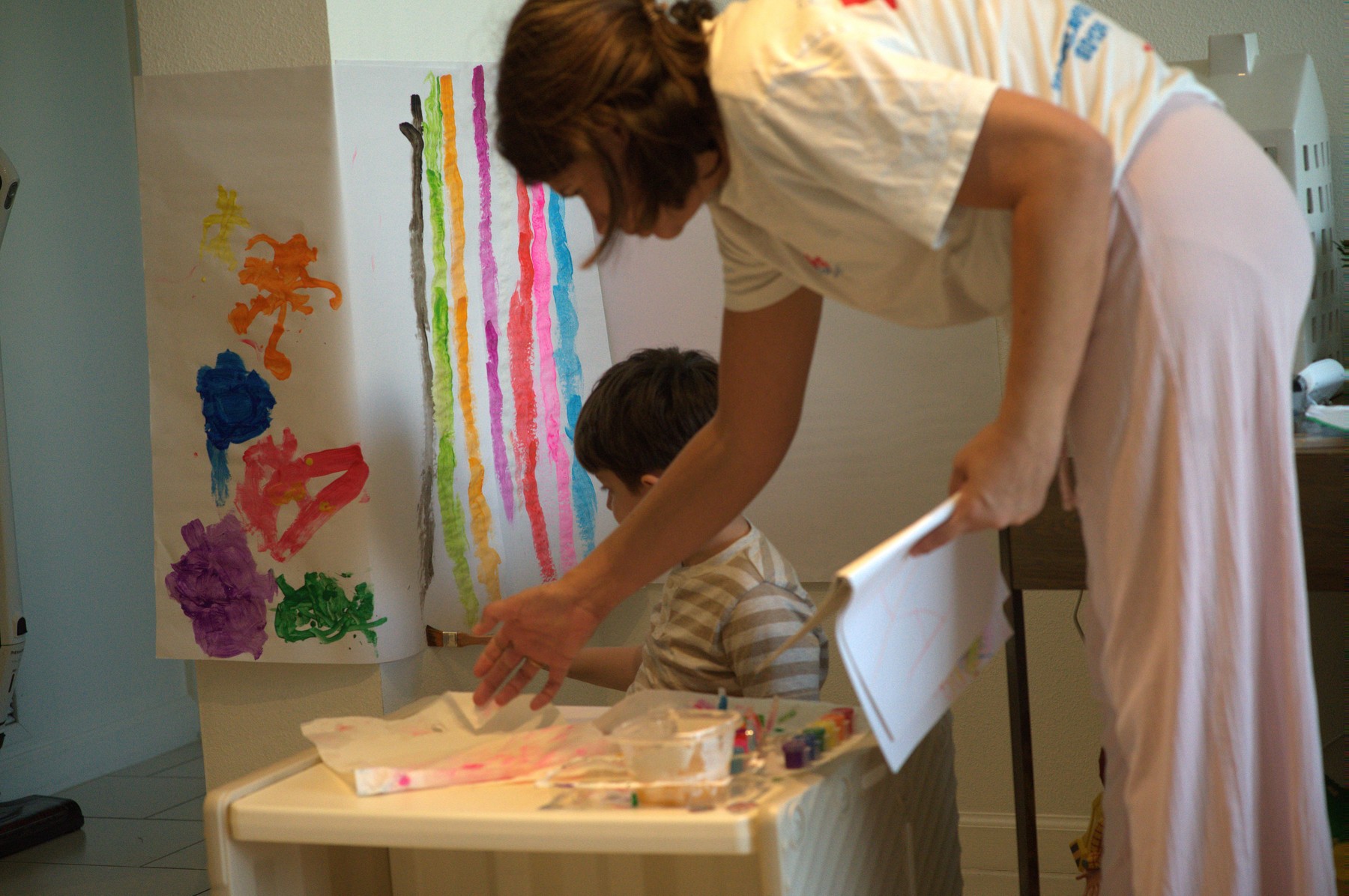
Lucas painting at his low table beneath the two wall sheets, with Lorena beside him.
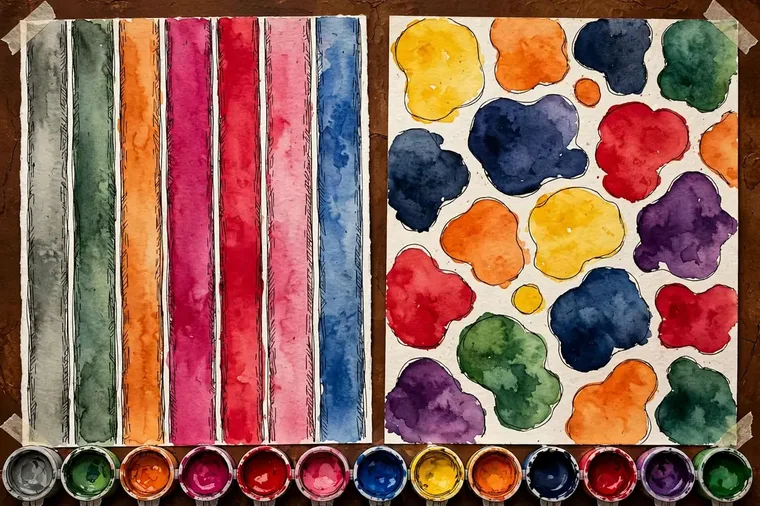
The stripes stand taller than he does. On the wall behind the low table, one big sheet carries them — green and orange and pink and blue, standing straight up in tall lines — and beside it a second sheet spreads its bold blobby shapes. Lucas sits small underneath them at his table, head down over the work. Lorena *[family record]* leans in beside him, his sketchbook in one hand, her other hand reaching for supplies.
That is the arrangement, and the page is in it. The painting is bigger than the painter, and nobody has cut it down to his size. At five, a child’s work is allowed to stand taller than the child — and help, at five, is the grown-up who keeps the supplies coming and keeps her hands out of the picture.
Carry the height of it, Lucas: the wall was yours, the stripes stood over you, and you painted underneath them as if that were the natural size of work.
Artwork by Timmy, made for this page
Page 3 of 14
Page 4 of 14
ERA ONE · PAGE 4
Red and Teal, Close Up
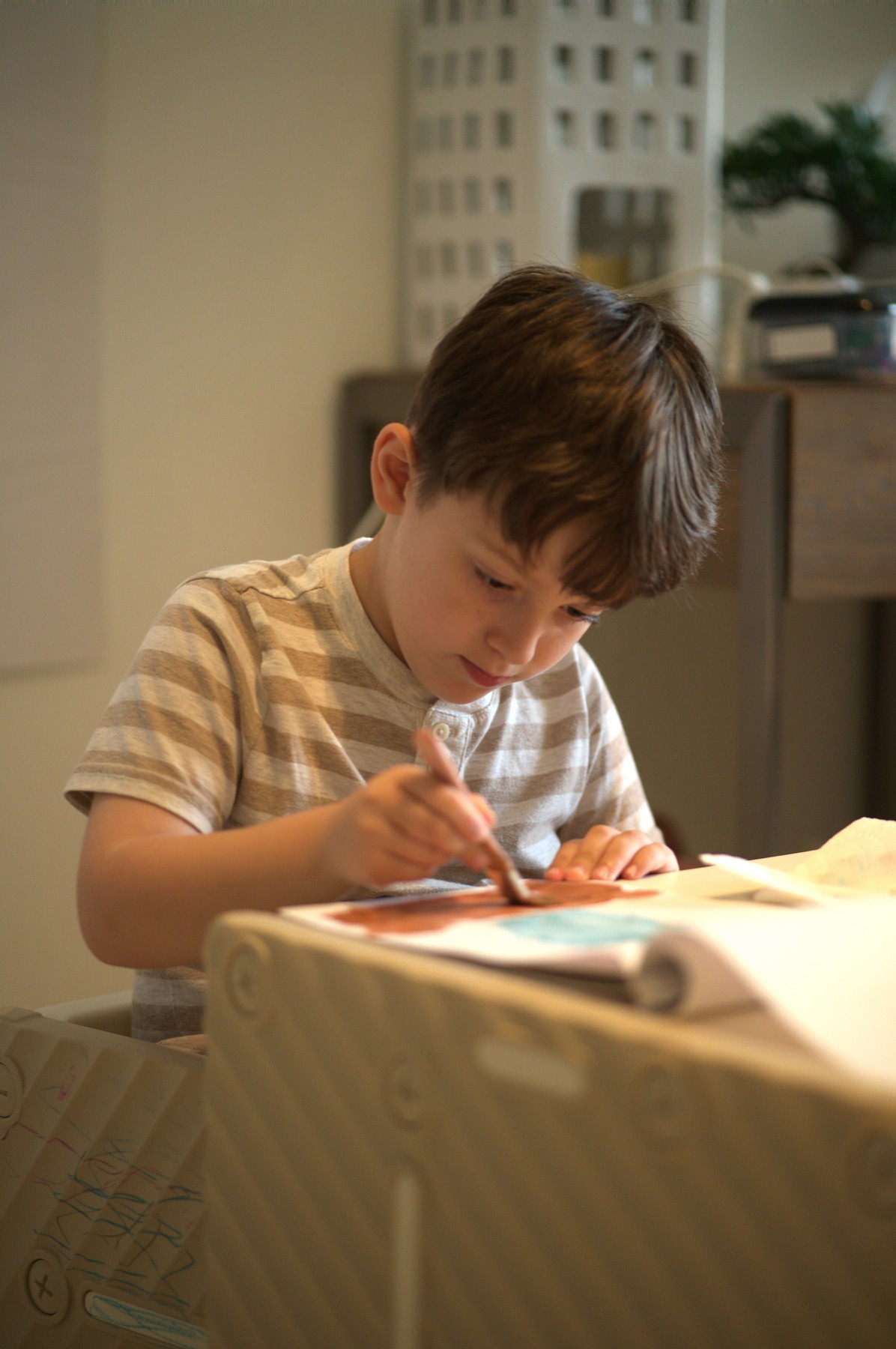
Lucas close over his paper, painting the rust-red and teal shapes with the wide brush.
His tongue gives him away. It shows, just a tip of it, at the corner of his mouth while he works — head bowed, eyes down, a wide brush moving in the rust-red shape on the paper in front of him. The teal shape sits beside it. His other hand is flat on the paper, holding it still. One hand paints. One hand holds.
That division is the page. Nothing here is posed; the boy from the first page, upside down and laughing, has gone quiet over two colours, and his body has arranged itself around the work. Concentration at five is not a look on a face. It is work the whole body divides up — brush hand, steadying hand, tongue tip out — and it is measured by how much of the child the task is allowed to use.
Carry the two hands of it, Lucas, and the tongue besides: when the work mattered, all of you reported for it.
Artwork by Timmy, made for this page
Page 4 of 14
Page 5 of 14
ERA ONE · PAGE 5
The Same Brush, Still Going
The same painting a moment later in the session’s estimated order, closer in, the brush mid-stroke in the rust-red shape.
The brush is in the middle of its stroke. Not lifted, not finished — down in the rust-red shape, close up, with the teal shape bright beside it on the white. Lucas leans right over the sheet, his free hand flat on the paper to hold it steady, eyes down. It is the same painting as the page before, a moment later in the session’s estimated order, and closer in. Nothing new has arrived. He is still there.
That still is the page. A stroke does not have to finish to be worth staying inside, and at five the middle of the work is not a gap on the way to done. It is a place. Brush down, paper held, eyes kept on the colour — the work holds him the way he holds the paper.
Carry the middle of the stroke, Lucas. Anyone can start. This page keeps you where starting turns into staying.
Artwork by Timmy, made for this page
Page 5 of 14
Page 6 of 14
ERA ONE · PAGE 6
Held Up for the Camera
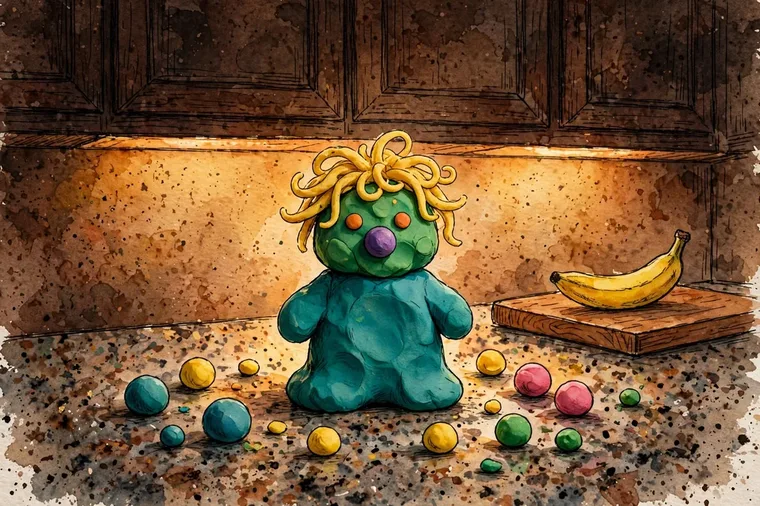
Lucas in the kitchen, holding the play-doh figure he made up close to the camera.
Lucas is in the kitchen, in a Spider-Man t-shirt, and he is holding something up for the camera. In one hand, close to the lens, is a small figure he made out of play-doh — teal at the base, green above it, yellow on top, with small orange dots and a purple ball set into it. His other hand is raised beside his head, a small pink piece pinched between its fingers. His head is tilted, and he is smiling. The work is in his hand, held out to be seen.
The painting pages before this one kept his hands busy and his head bowed, and this frame is another moment of making and another made thing — not that session, and the page does not pretend otherwise. What it keeps is the pause that comes after making. At five, a made thing is not finished when it is made. It is finished when it is shown: the hands that were busy lift, and the work leaves the table and is held up toward someone else’s eyes.
Carry the held-up figure, Lucas. The making was the pages before this one. This page is the showing — the moment the work is offered to whoever is looking.
Artwork by Timmy, made for this page
Page 6 of 14
Page 7 of 14
ERA ONE · PAGE 7
The Pool, Close Up
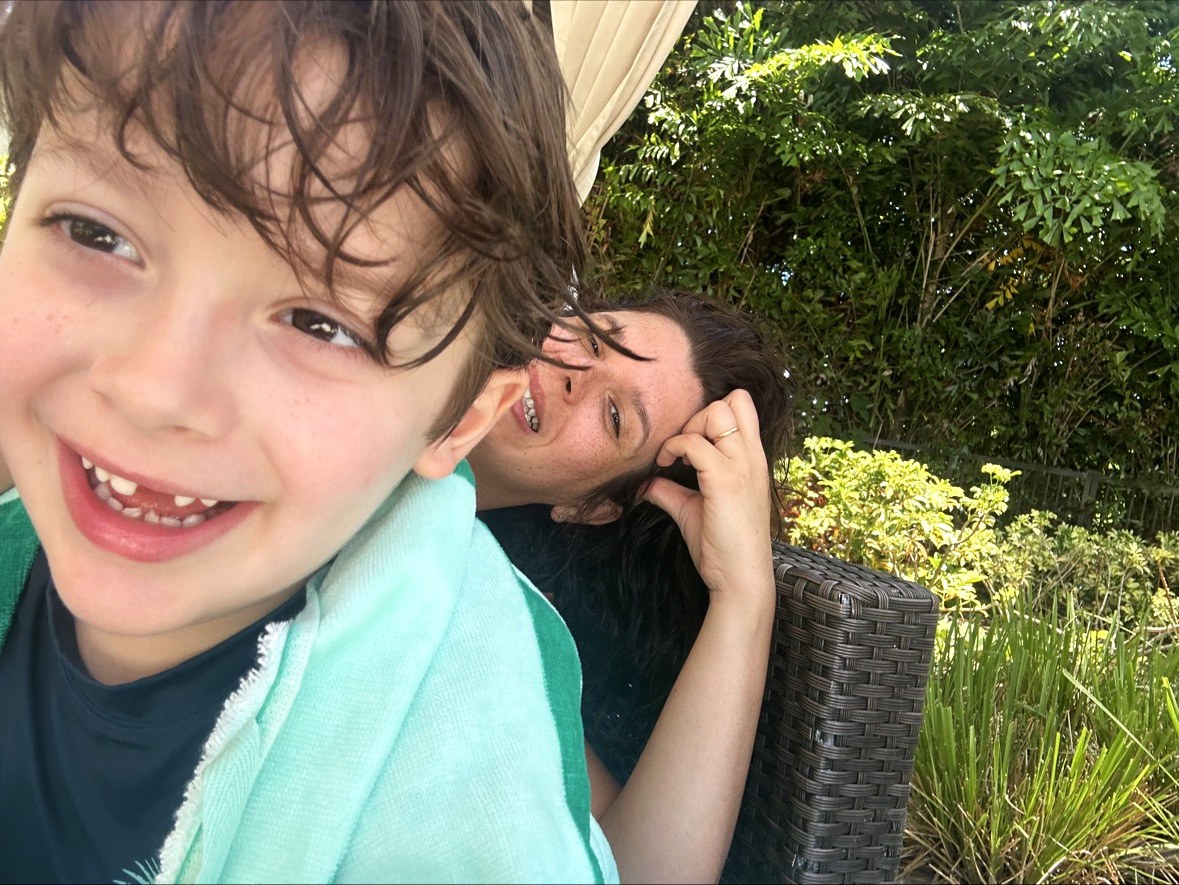
Lucas close at the pool, wet-haired and grinning, with Lorena peeking in behind him.
This is a close selfie at the pool, and Lucas’s face fills the left of the frame. His hair is wet and falls in damp curls over his forehead. A pale green towel is over his shoulder. He is grinning straight into the camera, close enough that the grin is the whole picture, and behind him, at the frame’s edge, Lorena peeks in, smiling, her head resting near his. There is nothing else competing. Wet hair, a towel, one face close to the lens, and one face behind it.
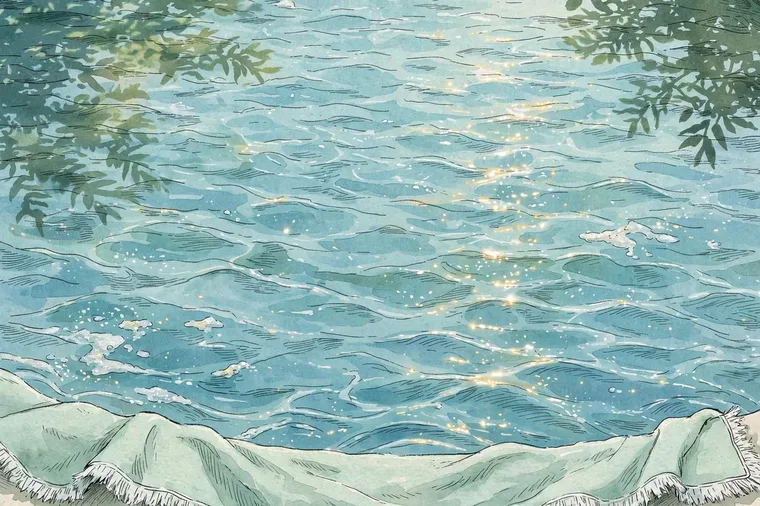
This is the book’s quiet water page, and this frame is a pool, not the bath. The water itself is nowhere in the picture except on him — in the wet curls and the towel over his shoulder. At five, closeness does not need arranging. It happens at arm’s length, one face filling the frame, and what a child carries out of the water is not the swim. It is the nearness.
Carry the closeness, Lucas. This one is a wet-haired face filling the frame, looking back.
Artwork by Timmy, made for this page
Page 7 of 14
Page 8 of 14
ERA ONE · PAGE 8
The Corner After He Left
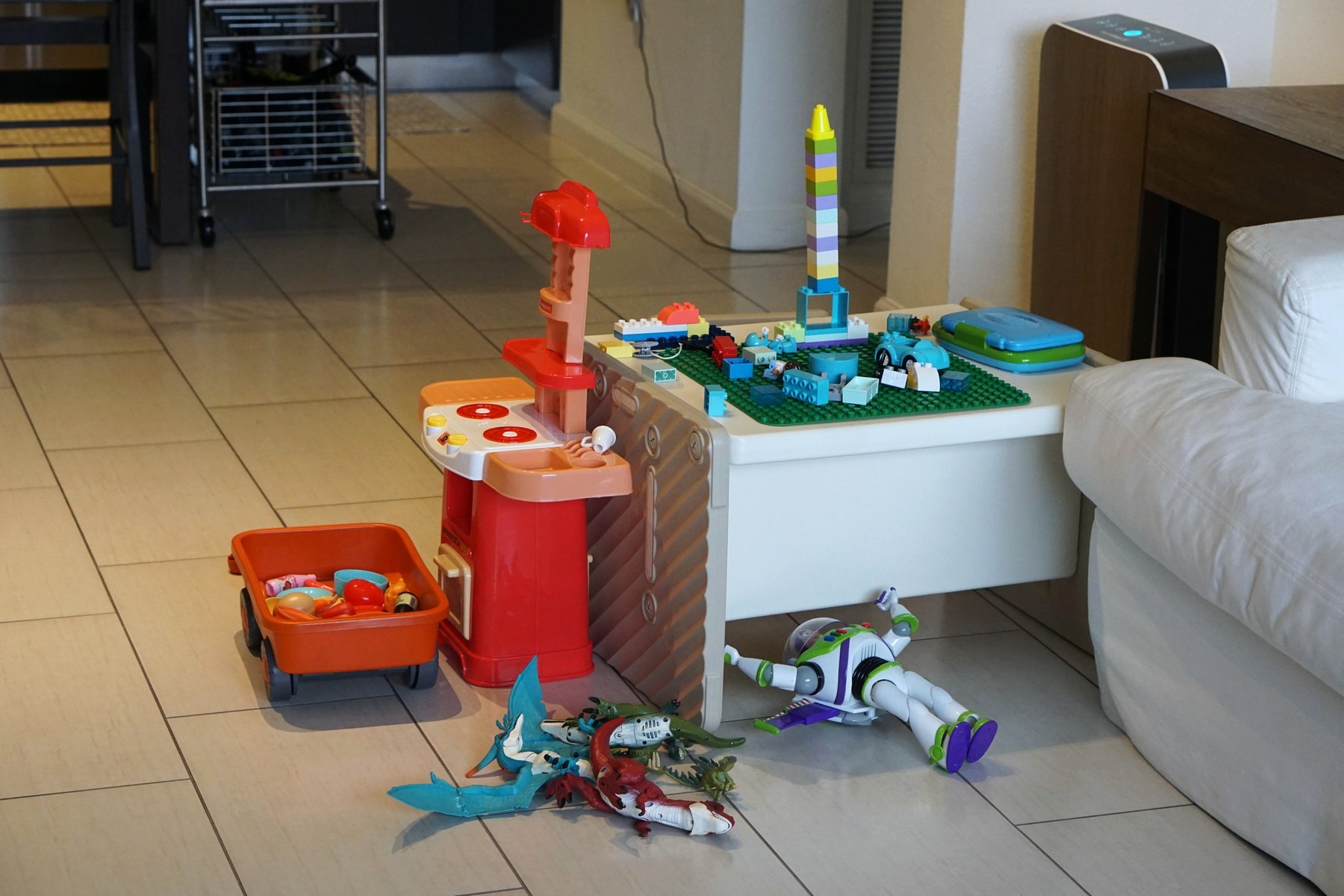
Lucas's play corner after he left it, the rainbow brick tower still standing.
Lucas is not in this picture. This is his play corner — the family record identifies the corner as his — after he left it. On the white table a tall tower of rainbow bricks is still standing, straight and narrow, among the scattered pieces. Beside the table is his red toy kitchen, and in front of it an orange wagon full of play food. On the floor the dinosaurs and the blue dragon lie in a heap, and Buzz Lightyear lies flat on his back. The tower is still standing. The corner is empty.
Like the creature’s page, this one holds his world without holding him — but where that page kept a single made thing, this one keeps a whole arrangement, and the arrangement is the evidence. Play at five does not end when the child leaves the room. The tower is still standing because nothing here was finished — the corner keeps the game exactly where the playing stopped, tower up, Buzz down, the heap where it fell.
Carry the shape the play left behind, Lucas. A room can keep the arrangement of an afternoon without keeping the boy, and this corner kept yours — every piece where the playing left it.
Artwork by Timmy, made for this page
Page 8 of 14
Page 9 of 14
ERA ONE · PAGE 9
Dinosaur Telephone
Lucas cross-legged in his play corner, holding a small green dinosaur to his ear like a telephone.
Lucas sits cross-legged on the tile floor, grinning right at the camera, and there is a gap where his front teeth are missing. He holds a small green dinosaur up to his ear like a telephone. In front of him a red T. rex stands guard on the floor, and behind it the blue dragon and another dinosaur lie tumbled over. He wears his Paw Patrol pajamas. The red kitchen and the brick table wait behind him. It is a pretend call, held exactly the way you hold a real one.
The corner is occupied again — the kitchen and table that stood empty on the last page stand behind him now, and the heap is back at work: one dinosaur at his ear, one on guard. At five, pretending is not a smaller kind of doing. The call is real while it is held — dinosaur to the ear, guard posted, grin on — because the belief is in the holding, not in the thing held. The picture keeps the gesture, and the gesture is the whole of it.
Carry the grin and the gap, Lucas, and the seriousness of the hold: a call is a call, even when the telephone is a small green dinosaur.
Artwork by Timmy, made for this page
Page 9 of 14
Page 10 of 14
ERA ONE · PAGE 10
The About-to-Negotiate Grin
Lucas stretched along the white couch, chin propped on one hand, grinning sideways.
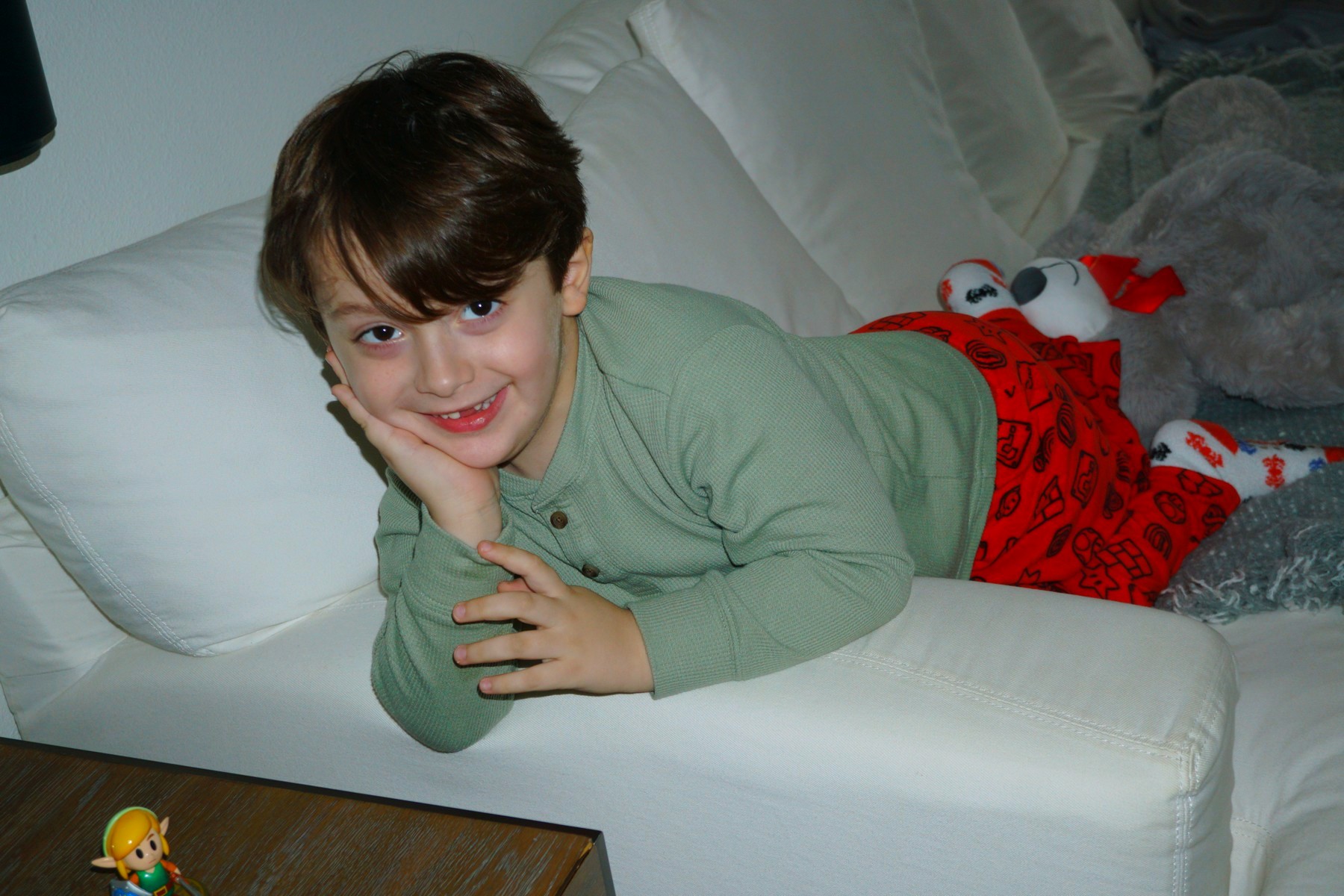
Lucas lies on his tummy along the white couch, his chin propped on one hand. He grins at the camera, sly and sideways, and his other hand rests flat on the forearm that props his chin.
The white couch is the book’s home ground — it held the upside-down laughter of the first page — and here it holds a different register. That grin has a name in the family: according to the family record it is the “about-to-negotiate” grin, and the page carries it under that name, without staging any negotiation. At five, a child already has a humour of his own, and the people who love him can already read it — chin on hand, the other hand resting flat on the arm that holds it. Personality does not arrive later. It is already legible.
Carry the pose whole, Lucas: the propping hand, the flat hand on it, the grin that needed nothing to happen next. Some portraits here are of work. This one is of a look — and the look is enough.
Artwork by Timmy, made for this page
Page 10 of 14
Page 11 of 14
ERA ONE · PAGE 11
Banana, Attacked with Joy
Lucas mid-bite into a peeled banana, eyes half closed.
The banana is already peeled, and he is already laughing. Lucas holds it in one hand — the peel hanging down in yellow strips, the fruit bitten into — and takes the bite the way his family's record names it: “attacked with joy” *[family record]*. His mouth is wide open on it, his eyes are half closed, and nobody in this frame is being careful. There is no small bite here. There is a boy, a banana, and the whole of his attention in his mouth.
That is the meal before manners reach it. At five, hunger is not a problem to be managed politely; it is good news, and it gets the whole face — the open mouth, the grin around the bite, the eyes gone half shut with the pleasure of it. The banana does not wait to be eaten properly. It is eaten gladly, at full strength, while the eating is still the event.
Carry that hunger, Lucas. Whatever is in your hands gets all of you while it is there — brush, dinosaur, banana. This page it is the banana, mid-bite, attacked with joy.
Artwork by Timmy, made for this page
Page 11 of 14
Page 12 of 14
ERA ONE · PAGE 12
I Do It Myself
Lucas at the bakery counter, cutting into a tall slice of chocolate cake with a plastic spoon.
The slice is tall, and the spoon is small, and the work is his. At a wooden table by the bakery counter, Lucas cuts into a tall slice of chocolate cake with a white plastic spoon. One hand grips the spoon and cuts; the fingers of the other hand rest on the top of the slice, holding it still. His eyes are down on the work. His navy shirt reads “EXPLORE” across the front, in green letters with planets inside them. Nobody's hands are helping. The hands in this picture are his.
Serving yourself is where independence stops being a claim and becomes a pair of hands. At five, doing it yourself is not something a child announces about himself — it is something his hands prove, one holding still and one cutting, on food in front of him. The slice is not finished, and this book does not say it was eaten. What the frame proves is earlier and better: the cutting is underway, and it is his.
Carry your two hands, Lucas. They were the thread all along — and here, one steadying and one cutting, they are doing the work themselves.
Artwork by Timmy, made for this page
Page 12 of 14
Page 13 of 14
ERA ONE · PAGE 13
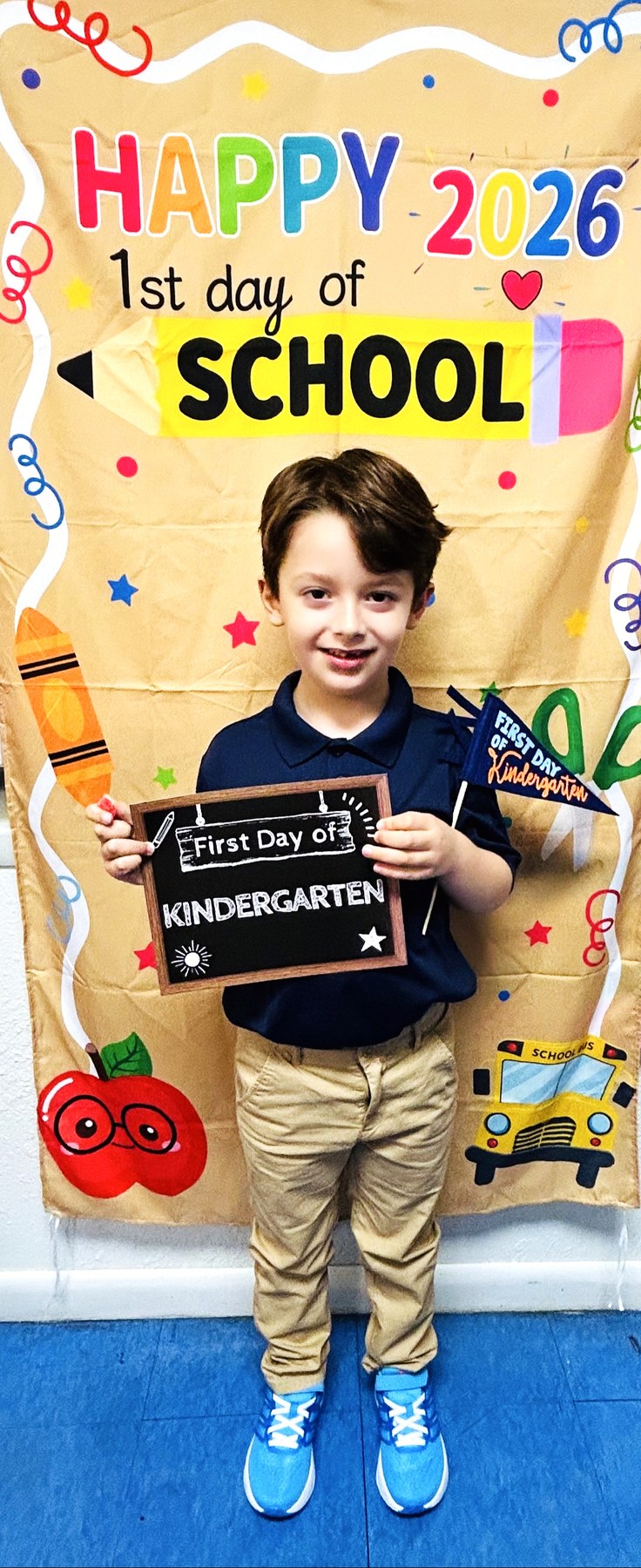
First Day of Kindergarten
Lucas stands full-length before a printed backdrop reading “HAPPY 2026” and “1st day of SCHOOL”, holding the framed board “First Day of KINDERGARTEN” in both hands. He wears a navy polo, khaki trousers, and bright blue sneakers.
He is standing very straight, and he is holding the sign himself. Lucas stands full-length in front of a big printed backdrop that reads “HAPPY 2026” and “1st day of SCHOOL”, holding a small framed board in both hands: “First Day of KINDERGARTEN”. A little pennant beside it says the same thing again: “FIRST DAY OF Kindergarten”. He wears a navy polo shirt, khaki trousers, and bright blue sneakers, and he is smiling at the camera, a gap showing in his front teeth.
A first day is arranged by other people — the backdrop hung, the board lettered, the new clothes chosen. What the child does in it is smaller, and entirely his: he stands, he holds the sign up where it can be read, and he smiles. At five, a beginning is not something you understand. It is something you stand inside — board in both hands, feet planted on the blue floor — while the day is still mostly other people's.
Carry the standing, Lucas. The board is in your hands, the day is written on the board, and the boy holding both is upright in the middle of it.
Artwork by Timmy, made for this page
Page 13 of 14
Page 14 of 14
ERA ONE · PAGE 14
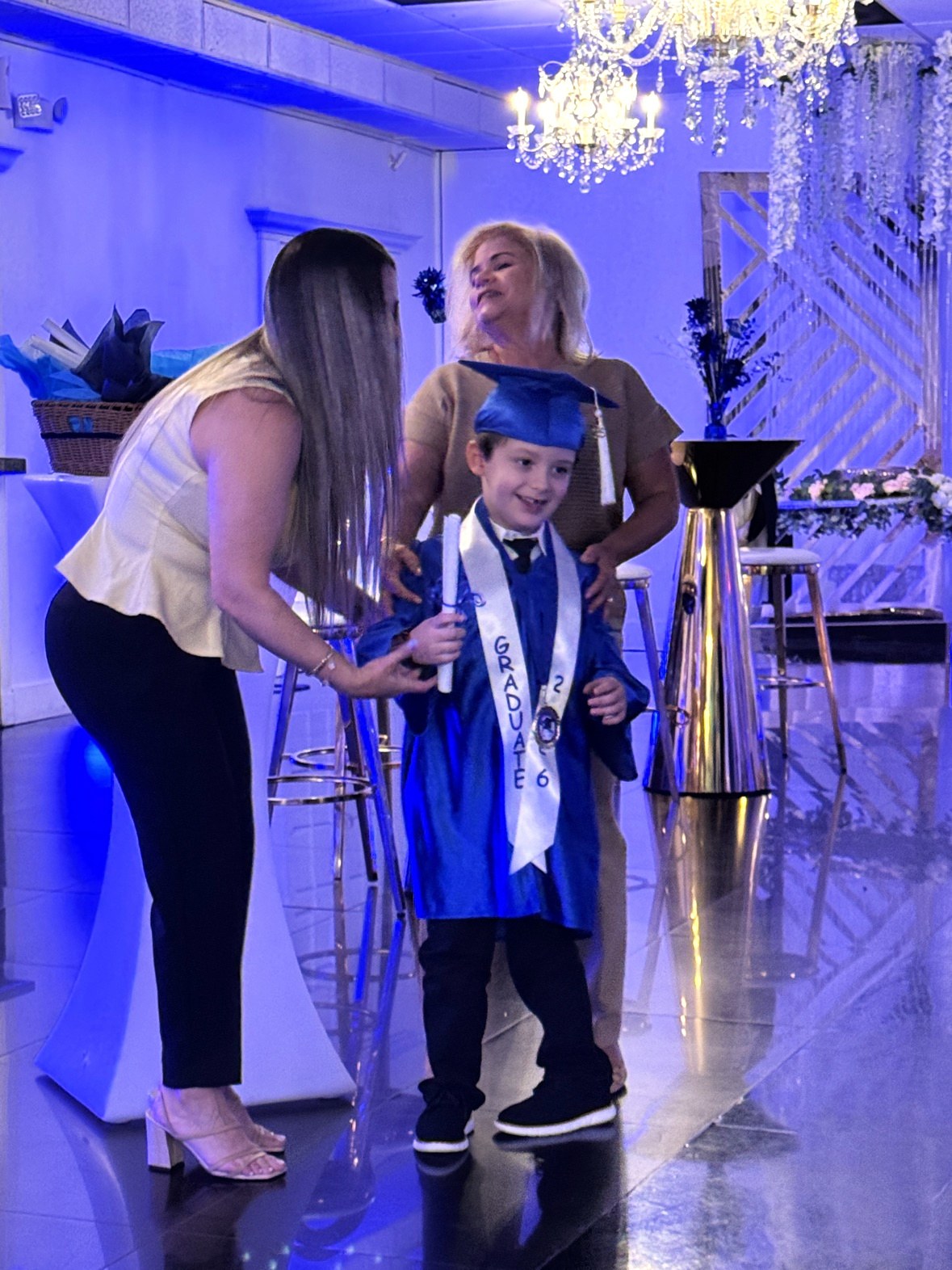
The Blue Cap and Gown
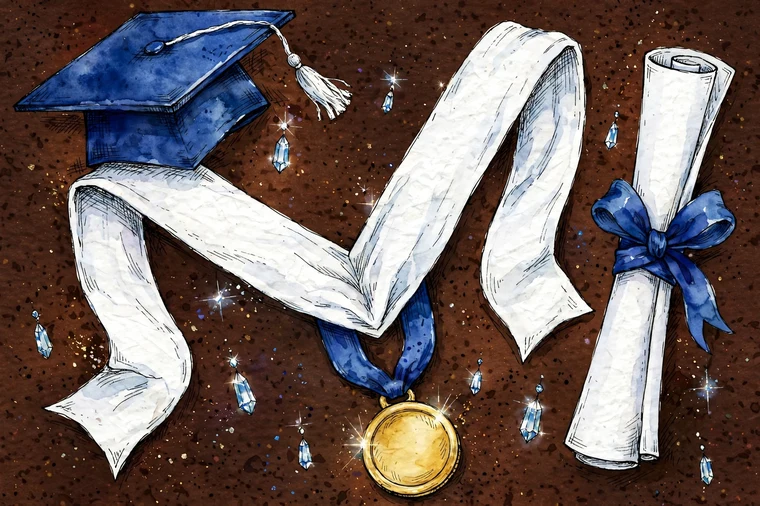
Lucas stands in the middle of a blue-lit ballroom in a blue cap and gown, a white sash reading “GRADUATE” across his chest, a medal at his chest, and a rolled diploma in his hand. A woman bends toward him at his side and another woman stands behind him; he is smiling.
The roll is the first thing to hold on to. Lucas grips it upright in one hand, white against the blue of his gown, while the grown-ups are still arranging him — a woman bent close at his side, her hands at his arm, another standing behind him, a hand at his shoulder. He stands where they have put him, in the middle of a ballroom lit blue, and he grins.
That stillness is the page. The cap is on, the medal hangs at his chest, the sash down his front reads “GRADUATE” — the whole ceremony is adult-sized, and its meaning is carried by the people around him. What a five-year-old can carry of it is in his fist: a rolled piece of paper, tied, held up straight. A passage can be completely true before it can be understood, and this is how it looks when it is: the meaning on loan from the grown-ups, the holding done entirely by the child.
Carry the roll held upright, Lucas — the future, for now, is exactly the size of what your hand can close around.
Who made this book. The book is kept at the keeper’s desk: The Book of Lucas, its keeper, receives every photograph the family shares, keeps the originals whole and uncropped, and sets each page in its order. The stories on the pages are Kenny’s, framed around each photograph and the thread of Lucas’s life so far. The artwork that companions each photograph is Timmy’s, made for that page from that picture’s own world of motifs and colours.
This edition. The public edition, set in the book’s storybook register — deep aged umber and parchment, serif type made for reading, and each page’s accent colour drawn from its own photograph. Its twin is kept in a calmer, larger register for the grandparents who read it on a phone.
The two editions. This edition and its twin carry the same pages, in the same order, with one exception: the twin carries one page more — “Para los que están lejos”, the grandparents’ page, second in the Spanish book and found only there. The twin is the Spanish edition, El libro de Lucas — Edición para los abuelos.
Sharing. Under the living-book rule, a finished page joins both editions as soon as it is complete and cleared; only the grandparents’ page joins the Spanish edition alone. The cover’s page count and the contents’ new-pages line are updated in the same pass.